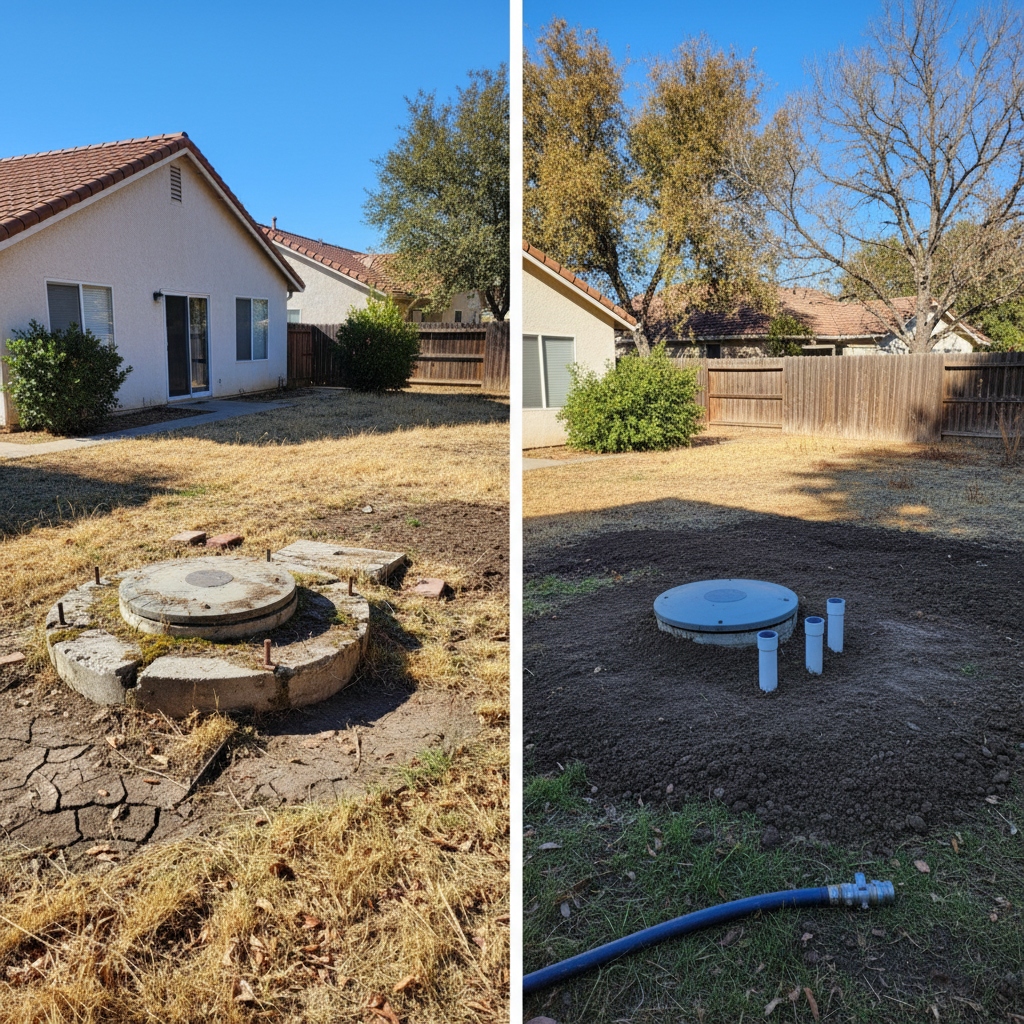
Alright, let's talk about septic pumping. It's one of those things nobody really wants to think about until they absolutely have to, but honestly? It's super important for keeping your whole system running right. Here in Fresno, with our hot summers and sometimes really clay-heavy soils, just ignoring your septic tank is pretty much asking for trouble. When it comes to figuring out when to pump, you've generally got two main ideas floating around: either stick to a set schedule or wait for an inspection to tell you it's time. Let's dig into both.
The Time-Based Approach: Set It and Forget It (Mostly)
This is probably what most folks are used to hearing. You hear it constantly: "Pump your tank every three to five years." And for a lot of homes, that's a pretty solid rule of thumb. It's simple, straightforward, and you don't have to guess much. You just mark it on your calendar, give us a call when it's due, and we'll come out and get it done.
Pros of Time-Based Pumping:
- Predictable Maintenance: You know when it's coming, which means you can actually budget for it. No nasty surprises.
- Prevents Overfilling: Sticking to a schedule makes it way less likely your tank will get too full. If it does, solids can get pushed into your drain field – and trust me, that's a whole different, much more expensive headache.
- Peace of Mind: You're actively taking care of your system, which really cuts down the risk of backups or total failures.
Cons of Time-Based Pumping:
- Could Be Too Soon: If you're, say, a single person living in a three-bedroom house, your tank probably won't fill up as fast as one for a family of five. Pumping every three years might be overkill, meaning you're spending money when you don't really need to.
- Could Be Too Late: On the flip side, if you've got a lot of people using the system, or you're using a garbage disposal heavily, your tank might fill up quicker than average. A three-year schedule could mean you're waiting too long, potentially stressing your drain field.
For many homes in older Fresno neighborhoods like the Tower District, where systems might be a bit older, a regular schedule can actually be a pretty good safety net.
The Inspection-Based Approach: Let the Tank Tell You
This method is a little more involved. Instead of just picking a date on the calendar, you have a professional check your tank regularly – maybe every year or two, depending on how much you use it – to see how thick the scum and sludge layers are. We use a special tool to measure these layers, by the way. When the sludge layer gets to about 30% of the tank's liquid depth, or the scum layer is within 6 inches of the outlet baffle, then yeah, it's time to pump.
Pros of Inspection-Based Pumping:
- Optimized Pumping: You only pump when it's truly needed. This can save you some cash in the long run if your tank doesn't fill up super fast.
- Better System Understanding: Regular inspections give you a much clearer picture of how your system is actually performing, what kind of waste is going into it, and if any little issues are starting to pop up.
- Early Problem Detection: An inspection might catch a baffle problem or a sign of drain field trouble before it blows up into a full-blown emergency.
Cons of Inspection-Based Pumping:
- Requires Regular Inspections: You still have to pay for inspections, even if you don't end up pumping right then.
- Less Predictable: You can't always plan exactly when the next pump will be, which can make budgeting a bit trickier.
- Risk of Forgetting: If you're not super diligent about scheduling inspections, it's easy to let things go too long, leading to the same problems you'd get from neglecting a time-based schedule.
So, Which One's Right for You in Fresno?
Honestly, for most homeowners in our area, I lean towards a hybrid approach, but with a strong recommendation for inspection-based pumping. Here's why:
Our local conditions, especially the soil types you find around here – sometimes really sandy, sometimes heavy clay – can affect how a drain field handles all that effluent. If your tank gets overfull and starts pushing solids into a drain field that's already struggling with drainage, you're looking at a big repair bill. An inspection helps you avoid that, doesn't it?
What I tell my clients at Horizon Septic Solutions is this: Start with an inspection every 1-2 years, especially if you don't know your system's history or if you've just moved in. This gives us a baseline. We can tell you how quickly your tank is accumulating solids based on your household's habits. From there, we can fine-tune a schedule that's truly optimal for your home. Maybe it turns out you only need to pump every four years, saving you money. Or maybe, with a busy family, it's every two-and-a-half years, which keeps your drain field safe.
Ultimately, the goal isn't just to pump your tank; it's to protect your entire septic system and avoid those costly repairs. An inspection-based approach, even if it means a small fee for the check-up, gives you the most accurate information and the best chance to extend the life of your system. It's about being smart with your investment, not just blindly following a generic rule.